RepOne Consulting
CPM Scheduling | Construction Expert

Sample Cases

Case Study I: Delay Claim for a Specialty contractor

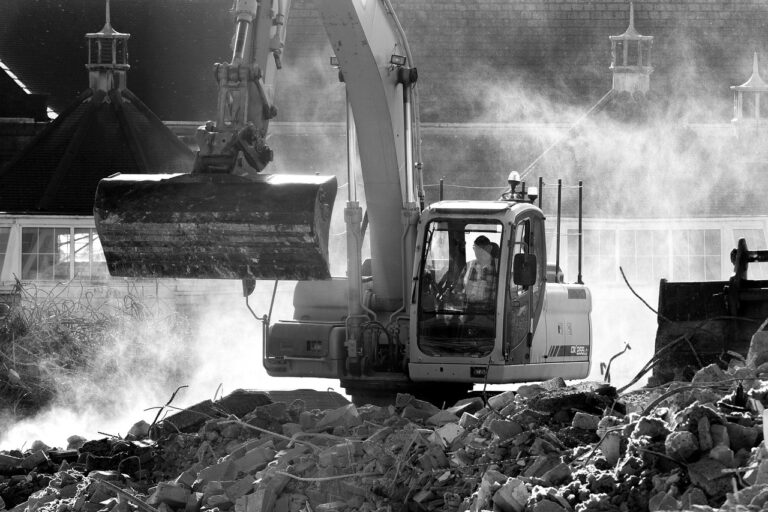
The devil was in the details for a small business excavator (plaintiff)  who discovered that a large site he was to develop was used as a construction debris dump, where the owner had buried debris from another site. This became painfully evident to the excavator who discovered the condition upon several refusals or obstructions for his excavator. 
 
Naturally the excavator wanted a change order to cover the cost of removals and resequencing the project.
Boring reports conveniently were located outside the future building footprint, which should have been a red flag.
 
RepOne was able to demonstrate the impact on the construction schedule of the hidden debris, which was that added resources and general conditions nearly doubled the contractor’s expenditures. The owner could have been on the hook for fraud: fortunately, the strong presentation of delays by RepOne gave the excavator the tool he needed to argue his position. The owner finally had to make the excavator whole for his change order work, which was considerable.
 
At the time, the contractor was at risk of losing his business. Thankfully, he has greatly expanded his business since the settlement.

Case Study II: General Conditions EOT Claim for an HVAC Mechanic

A challenging project endeavored to utilize a five-story sliver (12 feet wide)  space between two office buildings as a structure to encapsulate added on large mechanical equipment. The structural steel was to be stitched in along with the equipment, in such a way that would facilitate the equipment rigging and installation.


Soon enough, the equipment began taking longer and longer to rig, due to interference with the structural steel. Once the equipment landed, it was frequently obstructed when trying to set the equipment inside.


The contractor started writing change orders, including one for general conditions and overhead needed for the excess labor requirements. These increased with time and amassed to a large sum. Eventually, the mechanic sued ownership (Defendant) for damages.

 

RepOne argued that the project had not been provided with a proper schedule by the contractors. Once a claim came into parley, the cat was out of the bag: the contractor was hard put if at all to generate a time impact analysis schedule. RepOne seized on this shortcoming, and eventually the contractor withdrew his claim.
 
RepOne was also able to argue that the specific coordination of the structural steel and mechanical equipment, was wholly within the purview of the contractors’ means-and-methods. In short, the contractor couldn’t get out of his own way: sat back and expected a pig payout for a compensable EOT.

Case Study III: Standard of Care by an Architect

A couple sought to build a custom home in an affluent beach side community. They wanted an open layout, Modernist detailing, and lots of floor through ocean views. There was a full spa. The house would feature museum quality art pieces.
 
The couple then procured the services of a local boutique architect to design the project – including all structural and MEP engineering drawings, design coordination, and permitting.

The architect was asked to submit a schedule of design deliverables (drawings, specifications) which he did. As time went by, 100s of sketches, and a smattering of scaled drawings, were published. After a time, it became evident that the owner wanted very specific things that the architect did not seem to comprehend. The architect complained that the owner couldn’t make up their mind. Nevertheless; the town refused to approve what had been presented to it – delaying prospective start date significantly.
 
RepOne was asked to analyze the comprehensive set of sketches and drawings insofar as their value in terms of percentage complete. Once the study was complete, the principals met for an arbitration meeting, which Graham attended.
 
Graham presented his case showing how the drawings were not just partially complete, but the structural engineering was never coordinated with the architectural. He was surprised at the low quality of the drawings, as the owner was paying top-dollar. It took one arbitration session for the architect to fork over a generous rebate to his clients.

Archives: 2014 - 2024

Basic Architectural Millwork Scheduling

The Devil is in the Details Architectural millwork scheduling is a process describing several moving parts throughout the course of the project lifecycle, beginning with the design intent and design...

Choosing CPM Scheduling Platforms to Meet Your Needs

CPM Scheduling Platforms as Models of Efficacy Choosing CPM scheduling platforms is a matter of integrity and scale. You want to have the right tool box for the needs of your organization and the...

Generating Effective Construction Schedule Oversight Reports

Construction Schedule Oversight Success is Predicated on Having the Right Skill Sets There are both art and science at play in the business of preparing effective and productive CPM construction...

Delay and Disruption Cases: a Tale of Two Claims

I recently had the pleasure of serving as an expert on two concurrent delay and disruption cases that proved to provide some interesting insights into the nuances of delay and disruptions experienced...

Construction Schedule Acceleration: Optimizing for Success

Schedule Acceleration: The Big Squeeze Construction schedule acceleration is a strategy designed and intended to either mitigate and stanch off float erosion (delay,) or to recover lost time –...

Successful Shop Drawing and Submittal Strategies

There has always been a lot of confusion about what constitutes a ‘shop drawing,’ submittal,  and finally – coordination drawings. In order to optimize project management outcomes, it is...

Mastering Retrofit Construction Layout: Optimizing Axes Lines and Benchmarks

Retrofit construction layout is distinct from new construction in that new elements are dictated by existing program to remain or ‘ETR’ – such as structure supporting walls, floors, and...

Punch List Techniques and Strategies for General Contractors 

Confusion and lack of consensus over what a construction project punch list or punch-out list is and what it isn’t, contribute mightily to project conflict in the close out stage of most any...

Managing Construction Contract Extension of Time Claims

Very few construction projects seem to progress without at least one general disruption or delay time impact that affects schedule milestones, and requires trades to accelerate in order to keep to...