The imminent death of print has several lines of genealogy, most of which began long before digital imaging’s reign of terror. Around 1996 At that time, the office was located on the northeast corner of Worth Street and West Broadway. Our neighbor across the street, on the southwest corner, was the stodgy old behemoth 40 Worth Street, which housed the NYC Department of Transportation offices, among other rank dungeons.
We passed the freight entrance on West Broadway several times a day, on our way to get coffee, and hardly gave it more than thought until when we one day noticed, a compactor truck busy in the 40 Worth loading dock taking on its quotient of refuse, which was nothing out of the ordinary, however, upon further inspection, we noted on the dock- high and deep, stacks of old red-oak architectural flat-files, of nine or ten drawers each, perhaps from the 1930’s, or so. Nothing special, but our plan-clerk could use them. These same were in the process of being unceremoniously loaded into the compactor truck, and subsequently squeezed. We could hear the loud snapping and cracking sound, and sharp stink of dried oak casework relentlessly crushed. Upon further inspection we noted old dog-eared vellum cloth, and violet blueprints spilling out of these files, even as they met their maker too.
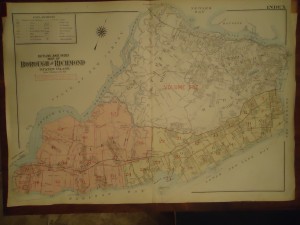
These included a few original engineers’ mechanical drawings, structural sketches, and blueprints of bridges, or buildings, such as the Waldorf Astoria and other historical structures.
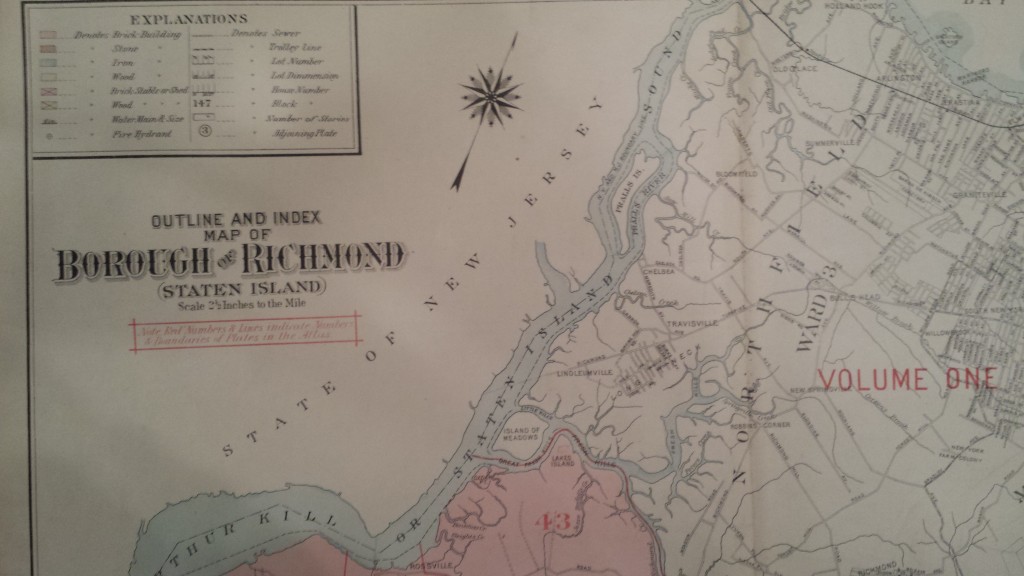
Note, images of Staten Island shown here are vellum on canvas, by a civil engineer or planner.
We asked the loading dock foreman if the drawers were there for the taking. He indicated that they may be, after which a modest gratuity, and a canvas mail cart for hauling suddenly appeared. Our first two trips netted 8 or 9 of the flat files measuring in in. 48w/36d/18h,– The third time we returned, we learned from the foreman that the source of the files was a large storage room, with more of them, located on the ground floor, behind the dock – right under a traffic judge’s chambers. For some reason, this judge always changed his gown in front of his window on the second floor. This storeroom below was being emptied of its contents so to provide for a functionary office.We were delirious with excitement, as we were granted access to a storage room literally filled to the ceiling with historical original scaled models, vellum and blueprints, and volumes of civil engineer mounted vellum books of the boroughs’ streets dating to 1917, 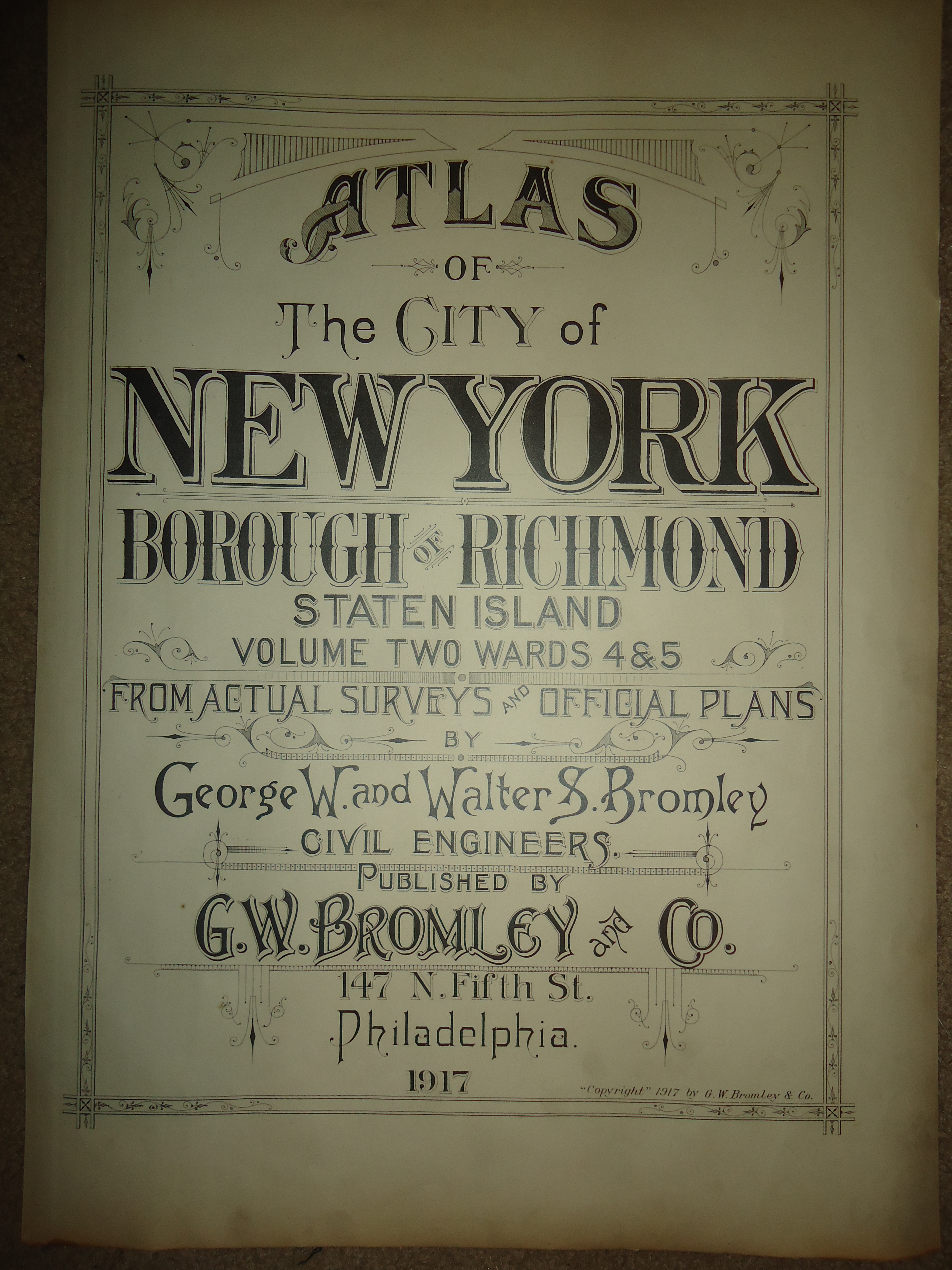 and the 1890’s, all of which were being chucked. We grabbed a waiting mail rescue trolley- like kids – not in a candy store, but in a candy factory.
We returned with our trolleys – enough to fill a small van, however, sadly, the loading dock foreman suddenly had cold feet, as his supervisor was just then lurking, and our access was cut off. So, who knows if the whole room went in the dumpster? It probably went to Edgemere, in Rockaway, because I saw about 15 trucks come out of the dock that day. So the point isn’t the loss of a small amount of mediocre stuff, but it makes you wonder about how commonplace this was. There could have been oceans of it.